

.png)
When Healing Looks Different: Psychedelics, PTSD, and the Fight for Real Recovery

There’s a conversation happening right now that many people never thought would go mainstream.
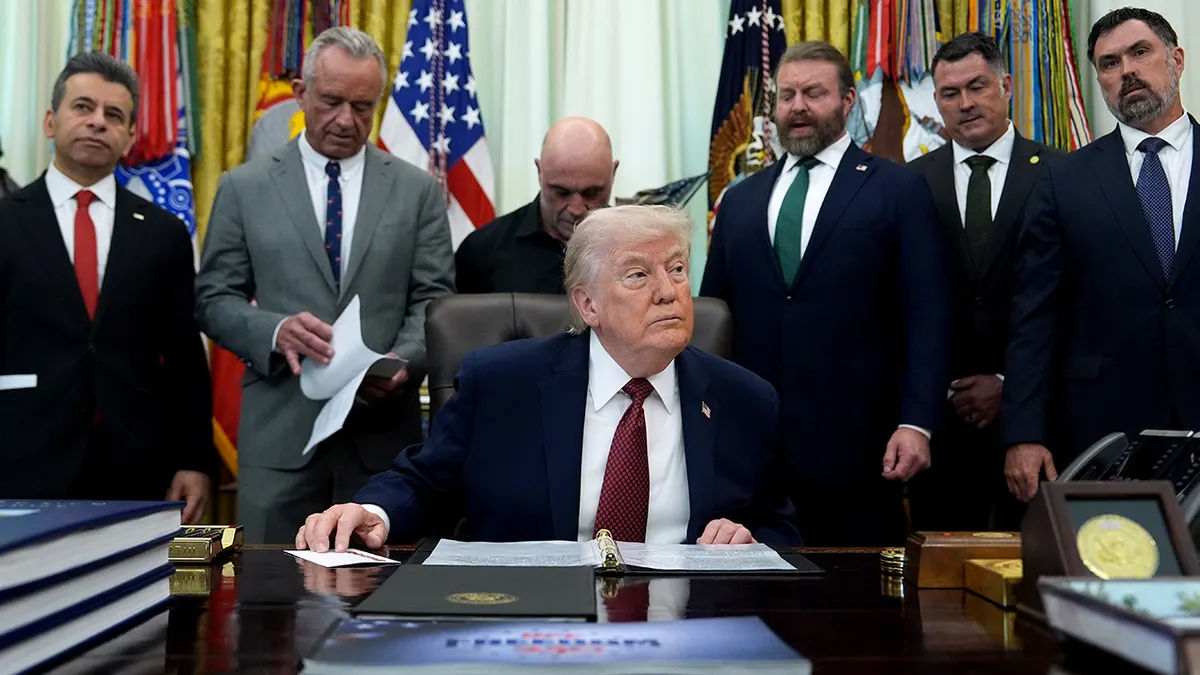
With a an executive order signed today (4/18/2026) by Donald Trump directing the FDA to accelerate the review of psychedelic-assisted treatments, we’re watching something shift in real time—how we think about mental health, trauma, and healing itself.
For some, this sounds groundbreaking.
For others, it sounds dangerous.
For many, it sounds like hope.
But this conversation? It’s personal for me.
My Reality: PTSD Isn’t Just a Diagnosis
I don’t speak about this from theory. I live it.
I carry a service-related PTSD diagnosis from my time in the military. But that didn’t stay contained to one chapter of my life.
It compounded.
The disease of addiction
The loss of my parents
The loss of my daughter
The trauma of incarceration tied to decisions I made while I was not mentally whole
Trauma doesn’t just sit quietly. It builds. It layers. It distorts how you think, how you react, and sometimes… who you become.
And if we’re honest, traditional treatment doesn’t always reach deep enough.
Why Psychedelic Treatments Are Getting Attention
There’s a reason the FDA has already labeled certain psychedelic therapies as “breakthrough treatments.”
We’re talking about substances like:
Psilocybin
MDMA
Ketamine
These aren’t being looked at as recreational drugs in this context—they’re being studied in controlled, clinical environments for people dealing with:
Severe depression
PTSD (especially in veterans)
Anxiety disorders
End-of-life distress
What makes them different?
These treatments don’t just suppress symptoms.
They may allow people to process trauma in a way traditional methods sometimes can’t access.
Some patients report:
Rapid relief from depressive symptoms
A sense of emotional “reset”
The ability to revisit trauma without being overwhelmed by it
That’s not small. That’s life-changing—for some.
But Let’s Be Real: This Isn’t a Magic Fix
We cannot talk about the potential without talking about the problems.
Because there are real risks.
1. Psychological Risk
These substances can intensify emotions. For someone unstable or unsupported, that can mean:
Panic
Paranoia
Re-traumatization
2. Lack of Regulation (Outside Clinical Settings)
What’s happening in research labs is controlled.
What happens in the real world? Not always.
Unregulated use can lead to:
Unsafe dosing
Contaminated substances
Dangerous environments
3. Dependency & Misuse
While many psychedelics are not physically addictive in the traditional sense, misuse is still possible—especially when people are desperate for relief.
4. Not for Everyone
People with certain mental health conditions—like psychotic disorders—can experience worsening symptoms.
This isn’t one-size-fits-all healing.
The Deeper Issue: Why Are We Here?
Let’s ask the harder question.
Why are we so desperate for new treatments?
Because too many people are suffering in silence.
Because too many systems failed to catch trauma early.
Because people like me learned how to survive—but not how to heal.
And survival coping mechanisms?
They can lead you down roads you never intended to take.
I know that firsthand.
What This Means for Veterans—and People Like Me
When leaders talk about reducing veteran suicide, that’s not just policy language.
That’s real people. Real pain. Real breaking points.
If there is something—anything—that can help someone process trauma instead of being controlled by it…
We owe it to them to explore it responsibly.
Not recklessly.
Not blindly.
But not fearfully either.
Real Talk: Healing Still Requires Intention
No treatment—psychedelic or otherwise—replaces the work.
Healing still requires:
Accountability
Support systems
Safe environments
Consistent effort
There is no pill, no therapy session, no breakthrough moment that replaces the decision to face yourself.
I had to do that.
And I’m still doing it.
Final Thought: Hope With Responsibility
This moment in history could open doors.
But doors don’t change lives—what we do after walking through them does.
If these treatments prove to be safe and effective, they could help people who have run out of options.
And that matters.
Because when you’ve lived through trauma—real trauma—you understand this truth:
Sometimes the difference between breaking and healing…is finally finding something that reaches the place pain has been hiding. ~Tonia Garnett
Real Talk. Real Life. Real Victory


